
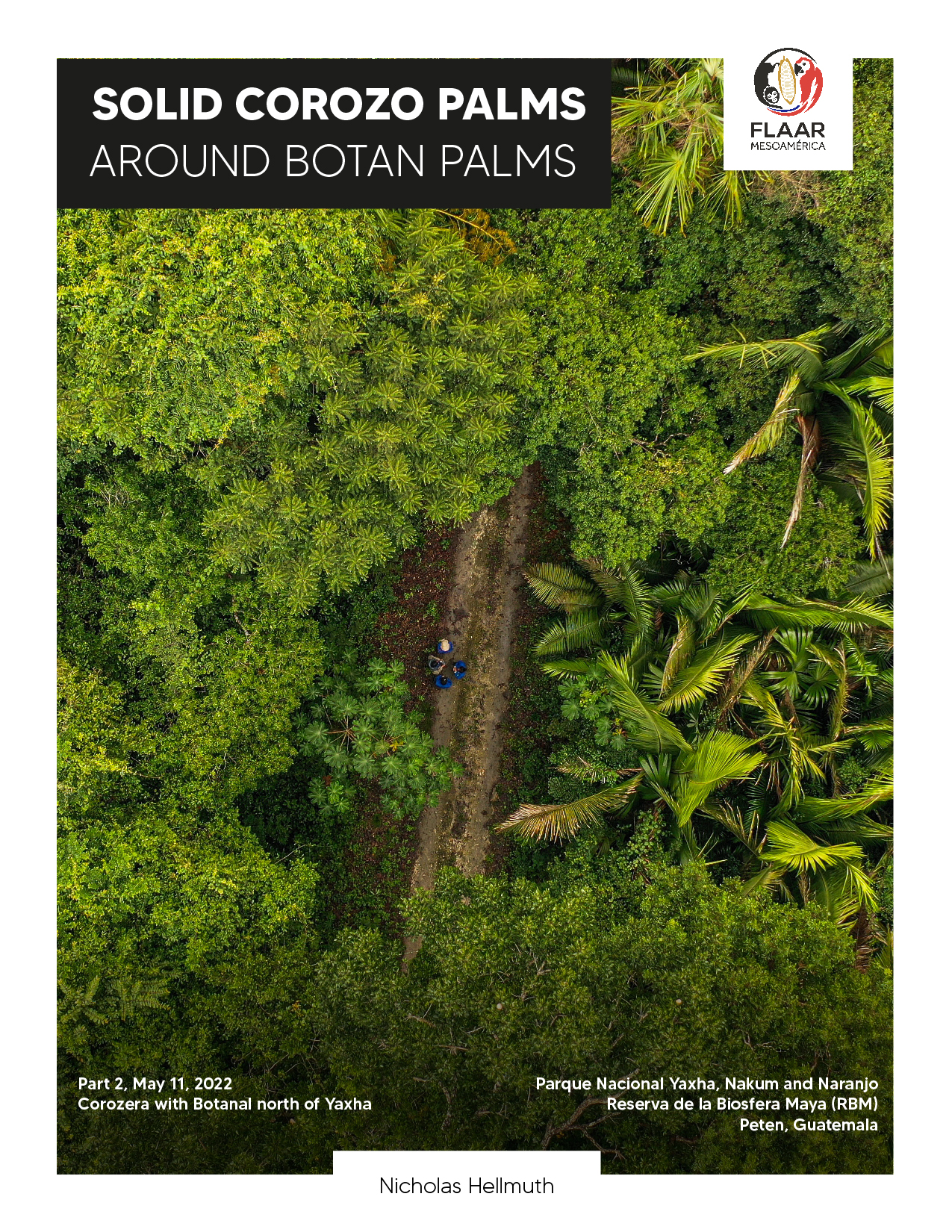
When you drive, or hike, from Yaxha the approximately 17 km to Nakum, you pass through two “islands” of solid corozo palms. Literally areas about 1 kilometer across, of solid corozo palm mixed with botan palm (Sabal mauritiiformis). There are also a few other tree species, vines and shrubs but the dominant plant is corozo, Attalea cohune (called cohune in English).
We are not speaking about the Maya archaeological site of Corozal (which probably got that name from there being corozal palms all around it or at least on one side).
Corozera is the word used by PNYNN park ranger Teco (Moises Daniel Perez Diaz). He knows local plants of Peten from having been a park ranger for over a quarter century. He helps the teams of FLAAR Mesoamerica on all our biology and ecology field trips to Peten.
I have initiated a long-range research and publication project named Palm Paradise Peten. The goals are to:
- Make a list of all wild palms native to Peten (for CONAP Plan Maestro reports)
- Make a list of all wild palms of Peten that have edible parts
- Find and photograph each species and prepare FLAAR Reports on each species
- Sort out the mish-mash of generic common local names that are not botanically precise
- Prepare videos on the more unusual or important palms
Eco-tourism is very helpful in providing jobs for the hard-working and capable local Maya people of Peten. Eco-tourism helps local people and government officials protect biotopes, nature preserves and national parks.
Lots of Different “islands” of Palms, and, islands of masses of other single plant species
If you read Cyrus Lundell’s 1937 book on The Vegetation of Peten you find lots of local names like:
- Guarumal, 144, 147 (Cecropia trees, not palms)
- Botanal (his pages 22, 25, 27, 30)
- Escobal (his pages 22, 30)
- Bayal is the name of a Desmoncus palm vine—no islands of these.
- Corozal (his pages 22, Zl, 32, 142, 145, 153, 161)
Curiously he does not use the word guanal nor even guano—he may have stuck with just the word botan (and thus botanal).
There were probably multiple hundreds of Corozeras in the Reserva de la Biosfera Maya
Even when forest areas have been chopped down, bulldozed down in Peten, often they leave dozens of tall thin botan palms still growing. And in many areas the cattle ranchers leave the remains of areas of dozens, scores, often hundreds of corozo palms still standing. Not all are in bajos—many masses of corozo palms are on hill slopes.
Below we show you samples of corozeras that we have had time to study so far. Would be great for a student at USAC or UVG to do a PhD dissertation on “Todos los Corozales del Peten, Guatemala”.

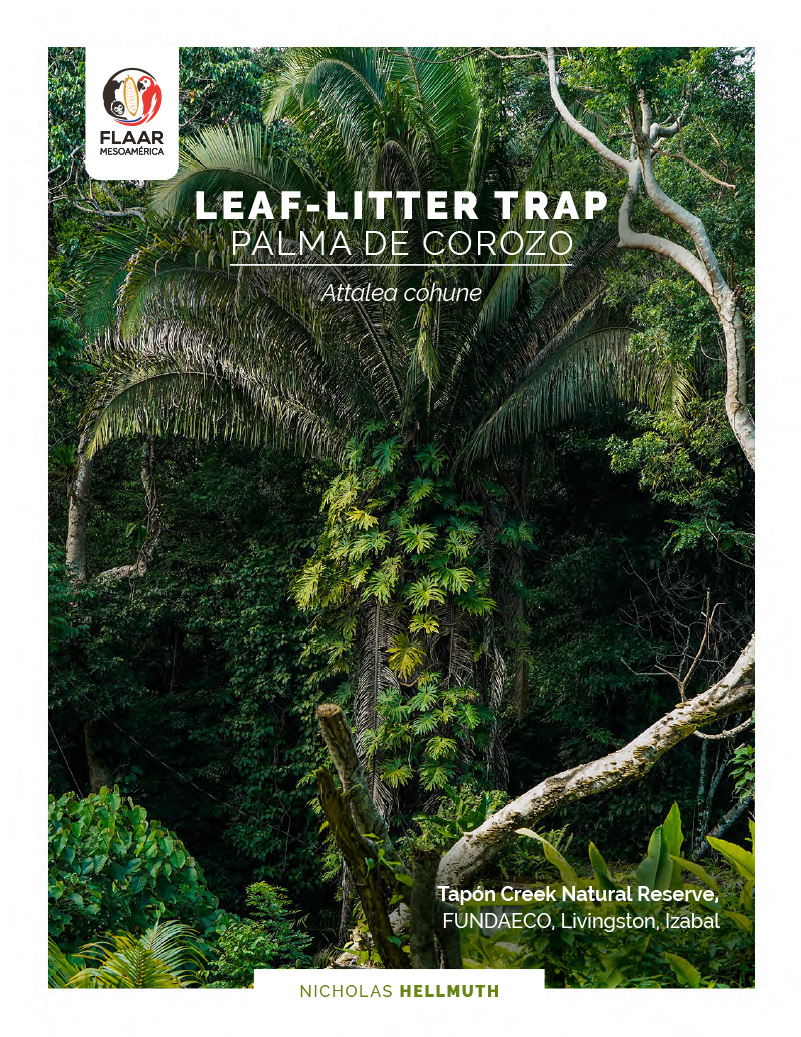
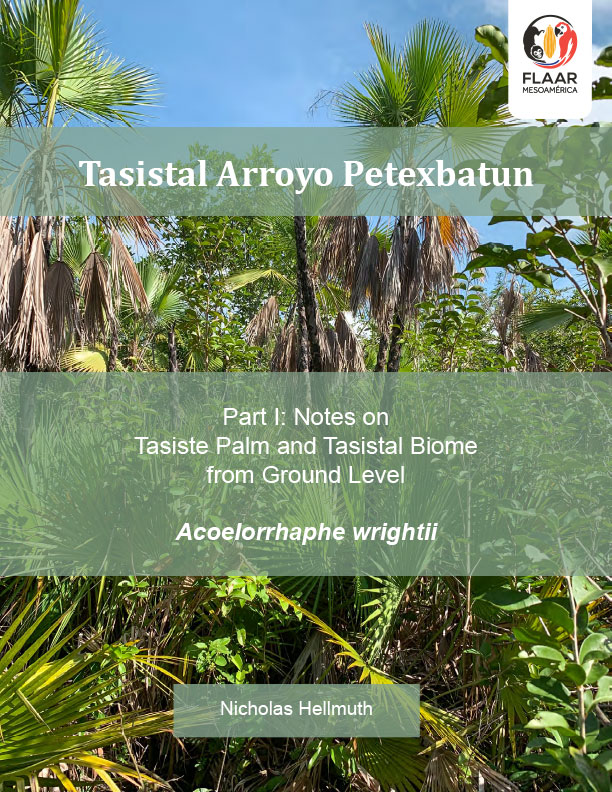
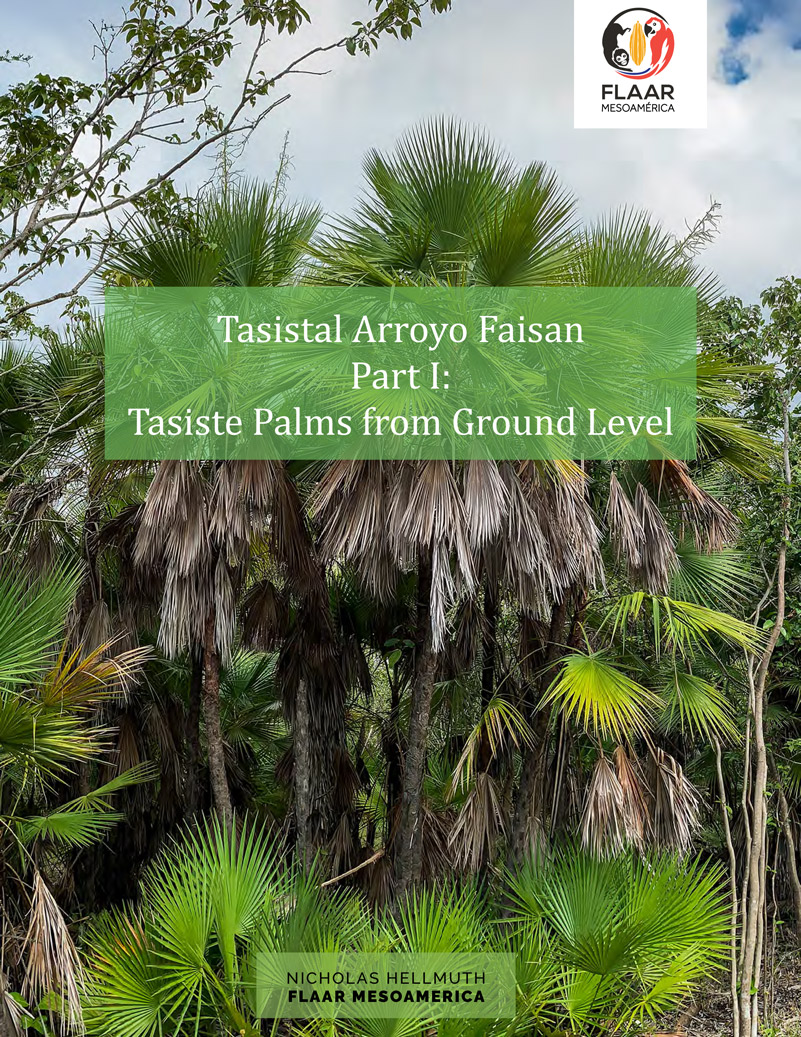
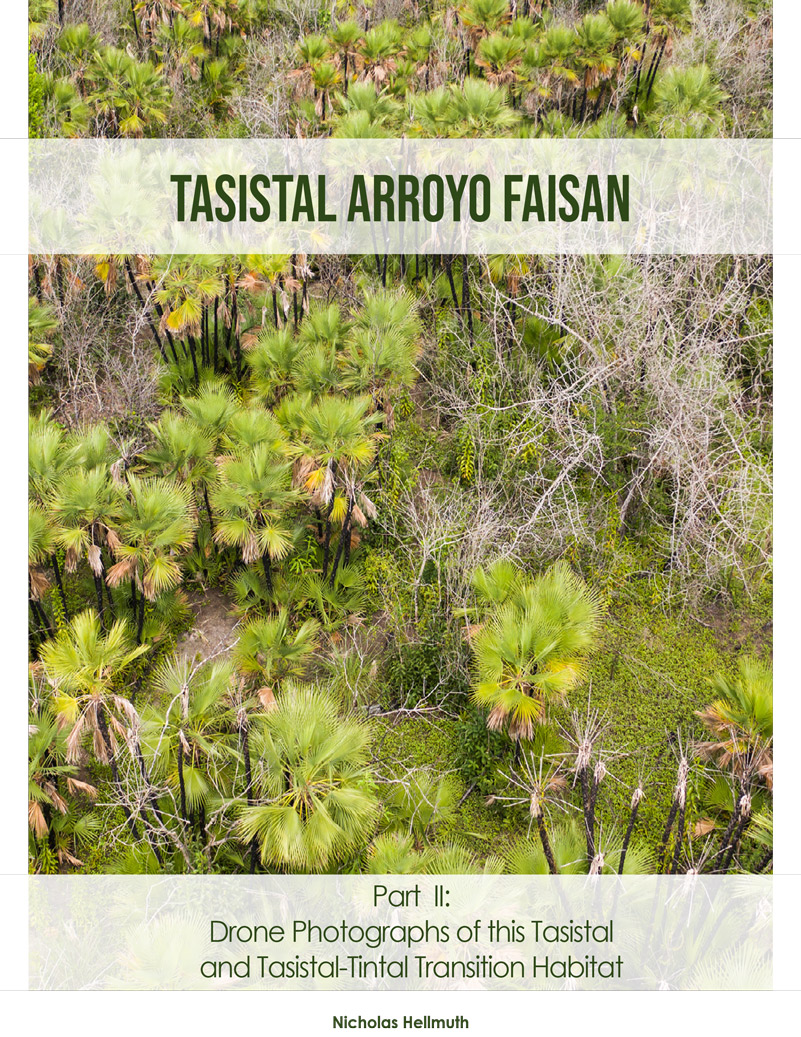
Below we also provide our publications on tasiste palms of savannas of RBM and Arroyo Petexbatun and Arroyo El Faisan (in Peten but south of the RBM)
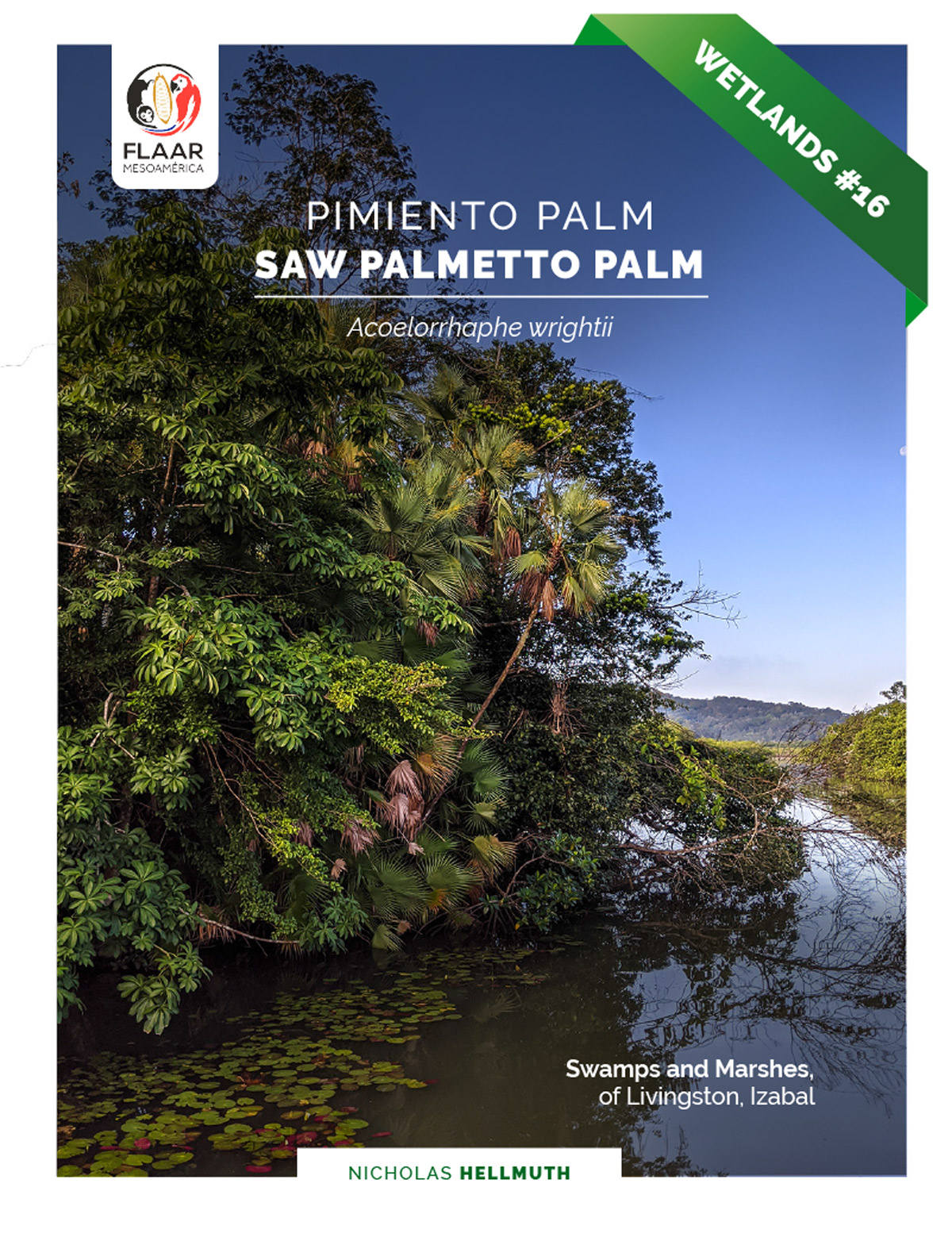
Below we also provide our publications on palms of the Municipio de Livingston, Izabal, Guatemala.

Written by Nicholas Hellmuth, Feb. 2, 2026,
Nicholas has been exploring Peten since age 17 in 1963. He dedicated lots of time and effort in the 1970’s to initiate creating a national park to protect the Lake Yaxha, Laguna Sacnab and Nakum areas—other conservationists added Naranjo-Sa’al to create what today is PNYNN