
Introduction to Hass Avocado
Avocado is a tree that belong to the family Lauraceae and Persea genus. This genus currently contains many species and most are from the southern United States (Persea borbonia) to Chile (Persea lingue). Only exceptions are Persea indica found in the Canary Islands (Spain) and probably others in southern Asia is thought to belong Persea. Originally from Guatemala, Central America and Mexico. (Portal Anacafé: cultivo de Aguacates).
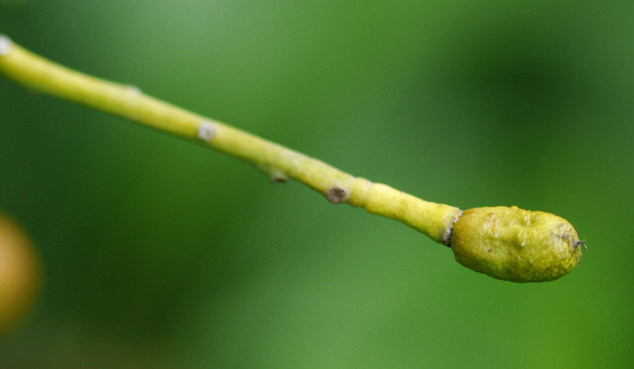
Tiny baby first fruit of the hass avocado tree. Parramos Guatemala 2011. FLAAR Photo Archive.
Most of the different varieties of avocado of producing countries have been classified into three basic races: Mexican – Mexican origin, Guatemalan, and West Indian - both of Guatemalan origin and part of Central America.
The avocado in pre-Columbian times was not of a size, shape, and consistency to be commercially successful. So botanists, such as William Poponoe, worked for years to find and breed more commercially viable avocados. In the late nineteenth century, there was an event that marked the first expansion of the manufacturing industry with the introduction of avocado to California in 1911, with product from Atlixco Puebla, Mexico. Later the Hass variety was developed.
Most native Maya avocados had a lot of fiber inside; not as yummy as modern varieties. So commercial agricultural specialists developed what is called the Hass avocado.
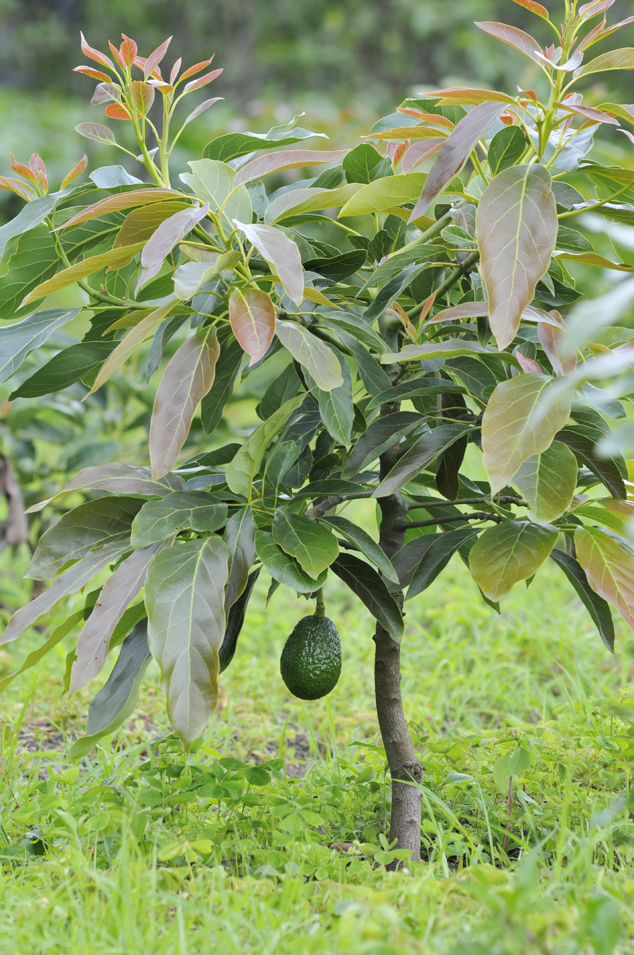
Four years old Hass avocado tree with first born fruit. Parramos Guatemala 2011. FLAAR Photo Archive.
Features
The avocado is a perennial plant, which reaches as high as 10 or 12 meters.
In the subtropical and warm-temperate areas, plants act as self-fertile when pollinated.
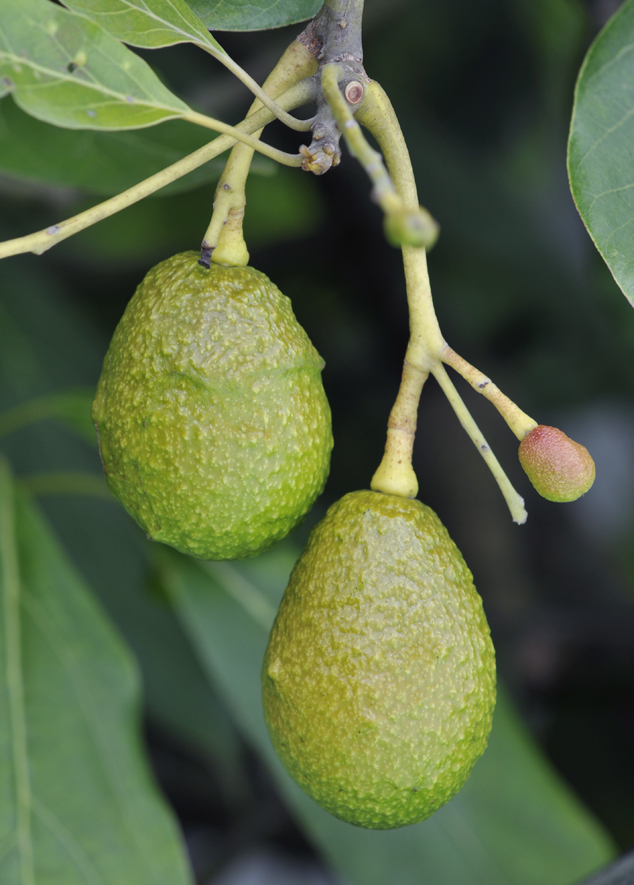
Hass avocados with a baby fruit on the same branch. Parramos Guatemala 2011. FLAAR Photo Archive.
The avocado fruit is a drupe fleshy, pear shape, oval, globular or elongated elliptical. Its color can be light or dark green, purple or black. Avocado contains vitamin E, A, B1, B2, B3, D and to a lesser extent C. Minerals such as iron, phosphorus and magnesium as well as folic acid, niacin and biotin.
Grafting
It is interesting to know how species arise. Hass avocado is done through a graft when the stem of the plant pattern is about 1 centimeter in diameter, which is reached within 4-6 months after planting. The height to be grafted is 20-30 inches from the base to be grafted onto a cool, airy place for a good bond between the pattern and the graft.
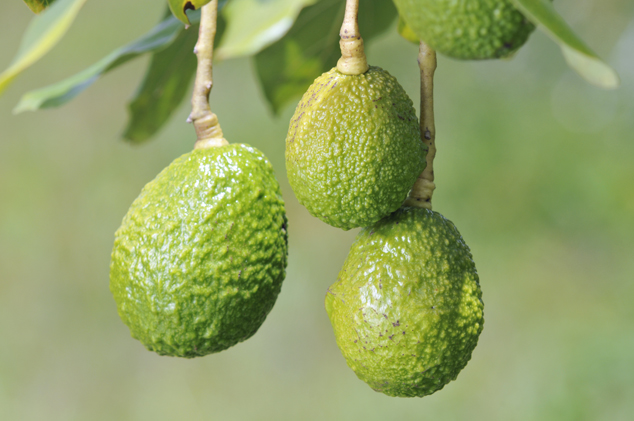
Light green Hass avocados fruits. Parramos Guatemala 2011. FLAAR Photo Archive.
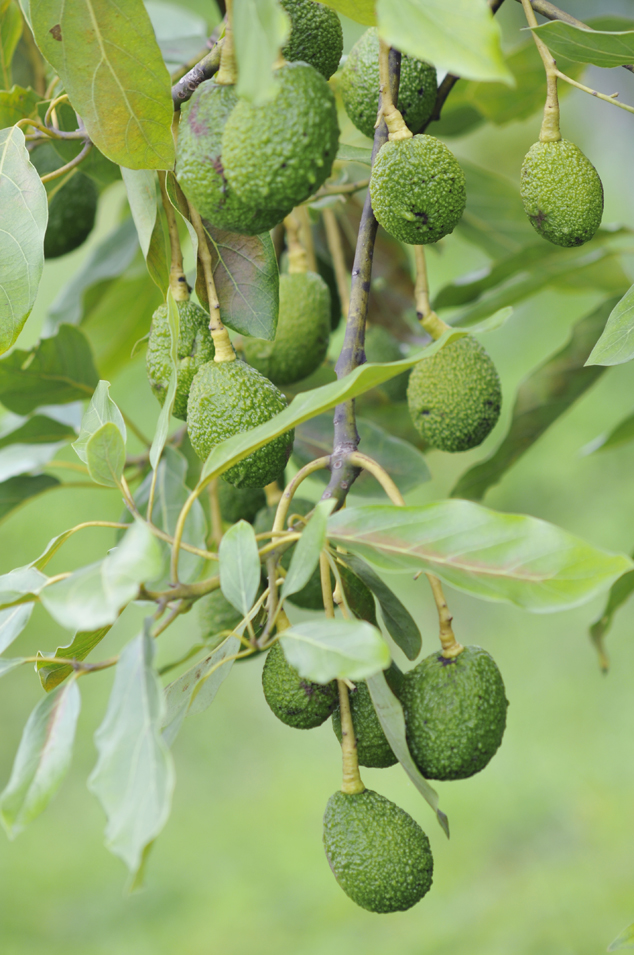
Many light green Hass avocados fruits hanging from the same branch . Parramos Guatemala 2011. FLAAR Photo Archive.
Color Change
The color change in avocados is given a light green to dark green or opaque, as well as loss of gloss.
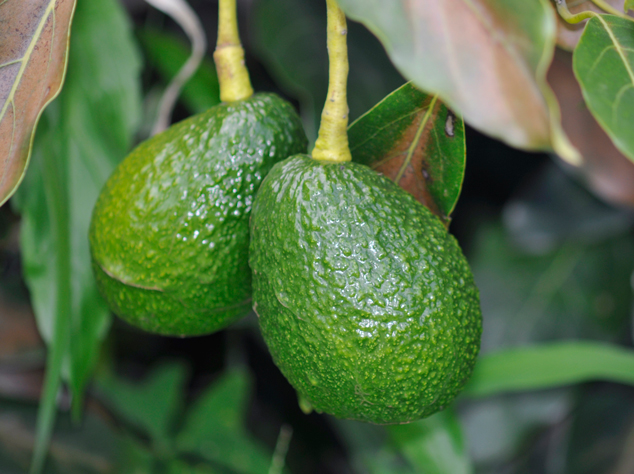
Dark green Hass avocados fruits. Parramos Guatemala 2011. FLAAR Photo Archive.
Uses
The avocado provides many health benefits among them are medicated; oil extraction, is used as raw material for shampoo and cosmetics, creams and skin cleansers. However, the main form of use is as a fruit, whether in the form or processed like fresh guacamole.
Hass Variety
The avocado tree is sensitive to cold; usually the plantations are located in areas free of frost. The hot winds dehydrate both the flowers and young shoots.
The flowering season
The normal flowering season is from December to March, and ‘crazy’ flowering from August to October. But the season varies depending on what part of the world you are in.
Harvest
The harvest is from November to April and from July to September. The fruit remains temporarily in the tree after maturity without losing quality.
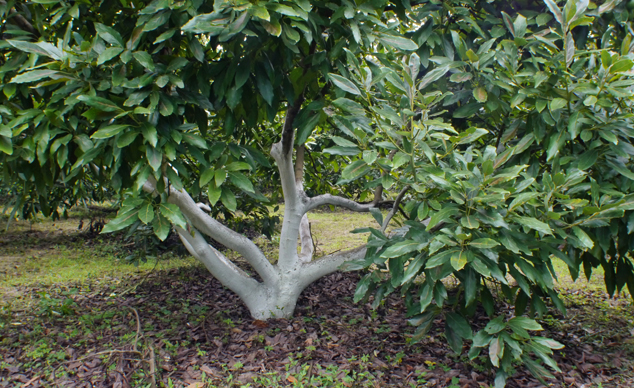
This is a nine years old tree. The white paint is made of lime and placed to protect the bottom of the tree.. Parramos Guatemala 2011. FLAAR Photo Archive.
Avocados from Mesoamerica Region
Persea americana
A tree with dense crown. Leaves are simple, alternate and acuminate. Flowers are greenish white and small. Fruits vary in size and in form within varieties but are regularly rounded or pear shaped. The seed can be as big as 4 cm diameter.
Native from tropical América. In Guatemala is a very precious common tree, grown to any height from sea level to mountainous areas above 2500 meters. Guatemala has a wealth of varieties of this species which have served for the development of avocado as a crop in other countries.
The fruit is edible and widely used in Guatemala in various dishes especially in preparing “guacamole”. An oil can be extracted from the seed and used in cosmetics. As medicine, this plant has several uses. It has been documented for abortive, antibacterial and vermifugal activity. The wood is used to make artistic figures. If you process the seeds with plantain leaves and potassium bicromate you get a brown dye.
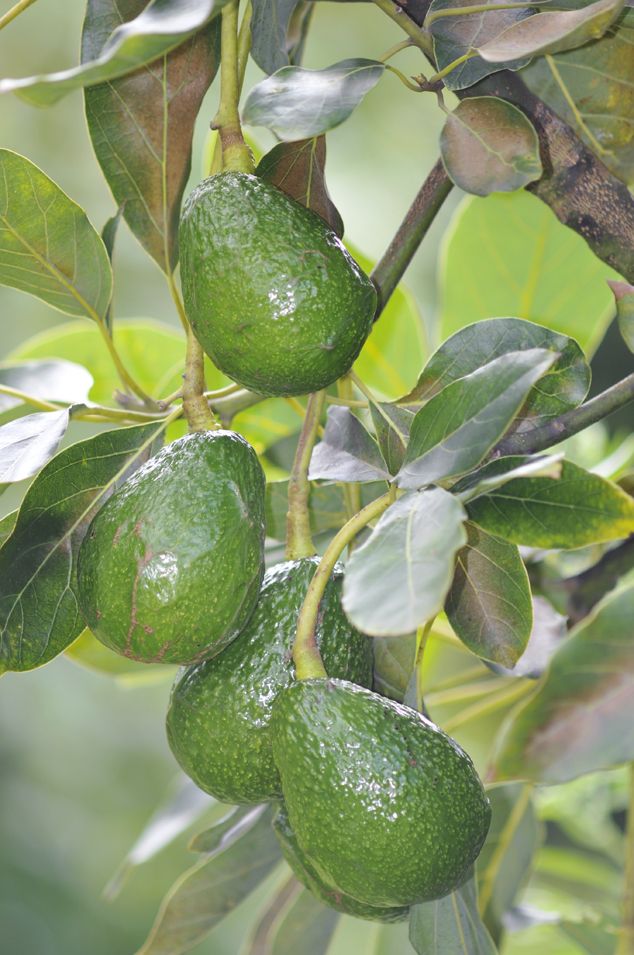
Dark green and grown Hass avocados fruits. Parramos Guatemala 2011. FLAAR Photo Archive.
Persea schiedeana
Tree, 8-25 m tall, the stems puberulent to glabrescent. Leaves simple, alternate. Flowers greenish white. Fruit of 4-6 x 8-10 cm, spherical or pear-shaped, green or greenish-brown when ripe, with a single seed inside.
The flowers have been observed from January to April and from August to November. The fruits were recorded in January, March, June, July and November. It is native America distributed from Mexico to Colombia at altitudes between 1,400 m to 1,900 m. The tree grows to about 20 m high, occasionally reaching 50 m. The flesh is oily with a milky juice and tastes like an avocado or coconut. The pear-shaped fruit is easily mistaken for an avocado. However, it contains a much larger central seed. The flesh has stone cells and a gritty texture that is generally considered unfavourable for edible consumption, despite its appealing taste. The cotyledons, unlike those of the avocado, are pink internally.
BIBLIOGRAPHY ON AVOCADOS
We will have a more complete bibliography later this year, on our bibliography web site, www.maya-art-books.org. But in the meantime, here are some discussions of avocado of Mesoamerica.
CHIZMAR FERNANDEZ, Carla
2009 Plantas comestibles de Centroamerica. Instituto Nacional de Biodiversidad, INBio, Costa Rica. 360 pages.
MacVEAN, Ana Lucrecia
2006 Plantas utiles de Solola. Universidad del Valle de Guatemala. 222 pages.
2009 Plantas de los bosques montanos. Universidad del Valle de Guatemala. 177 pages.
WEBSITES
Portal Anacafé
Cultivo de Aguacates
http://portal.anacafe.org/Portal/Documents/Documents/2004-12/33/5/Cultivo%20de%20Aguacate.pdf
http://www.avocadosource.com/journals/cictamex/cictamex_1998-2001/CICTAMEX_1998-2001_PG_171-187.pdf
Most recently updated August 1, 2016.
First posted August 26, 2011.