
Introduction to huisquil in Mayan agriculture lowlands and highlands
This is a vegetable that has been used since the time of the Maya. Its uses have been reported since the sixteenth century. The name chayote is derived from the Aztec word chayotl, spiny squash.
Liana, stems with tendrils.
It is distributed in the southeastern United States and the West Indies to Brazil, Bolivia and Argentina. It is believed that its original distribution was more restricted, but this plant was propagated by the indigenous peoples.
Flowering and fruiting throughout the year.
There are substantial plantations of Sechium edule south of Coban, Alta Verapaz. There are more plantations of around San Jose Pinula that I can count (about 30 minutes from Guatemala City). And each plantation has thousands of plants.
Some are the dark green variety, güisquil. Other plantations are of the perulero: a light pale yellow or partially light green or off-white variety. Other plantations include wiskil with "whiskers", which are thin hair-like or sometimes very short spines (but not likely to tear your fingers to shreds unless you are really careless).
These vegetables are in about every market in the country. Thus the logical question is, how many books and articles about Mayan agriculture give Sechium edule a due place in the hierarchy of Mayan foods?
Names for Sechium edule include Chayote, perulero, güisquil, huisquil, wiskil, Chaya, pataste (Nicaragua), cho-cho (Belize), and vegetable pear.
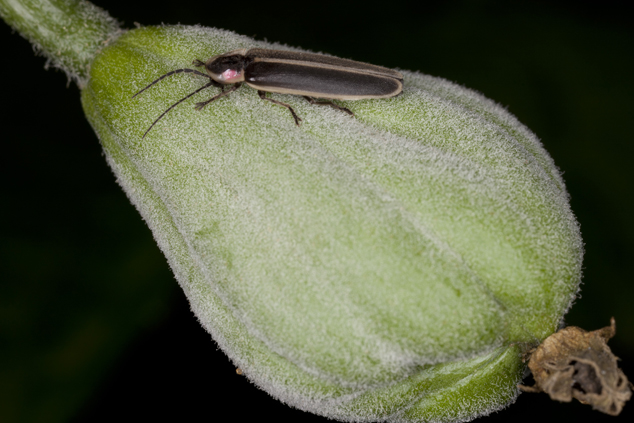
Chayote plantation at Pinula Guatemala, photo by Nicholas Hellmuth
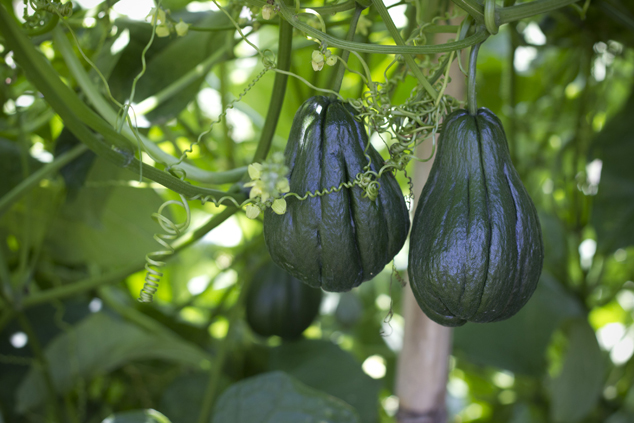
Guisquil plantation at Pinula Guatemala, photo by Nicholas Hellmuth
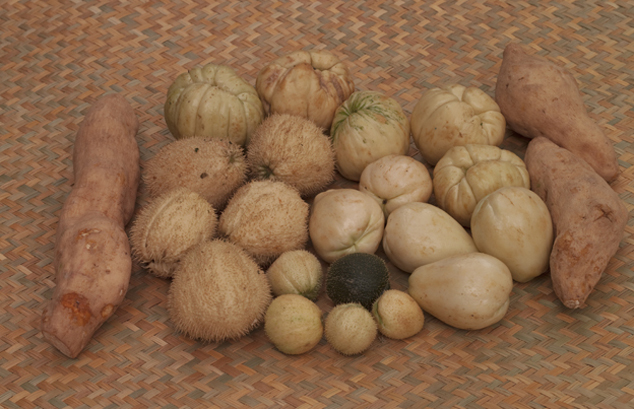
All kinds of chayote fruits and chayote root (ichintal), photo by Nicholas Hellmuth
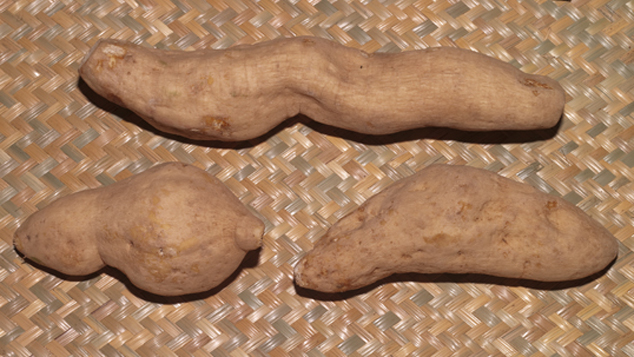
Chayote roots (ichintal), photo by Nicholas Hellmuth
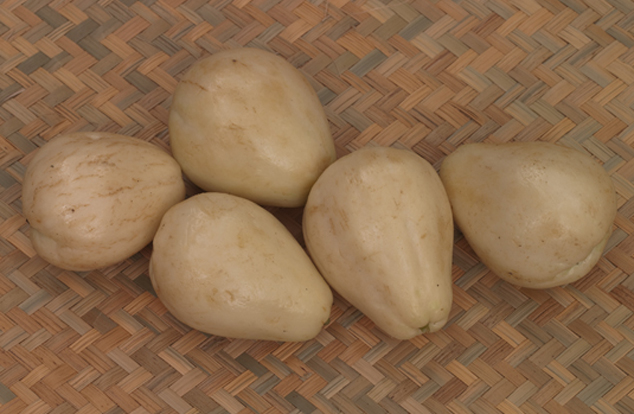
Chayote pale version known as "perulero", photo by Nicholas Hellmuth
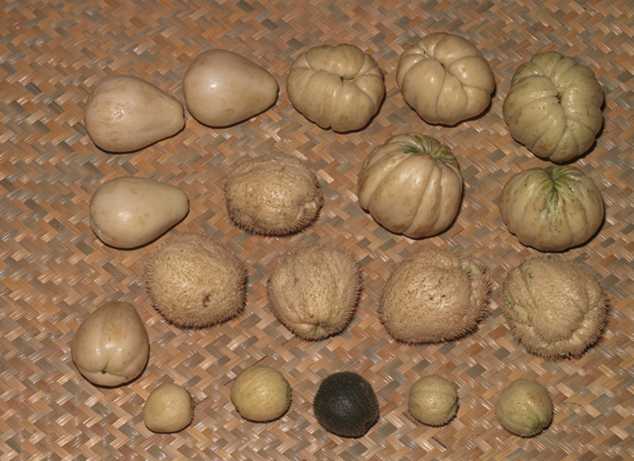
All diferent kinds of chayote pale version known as "perulero" with and without spines, photo by Nicholas Hellmuth
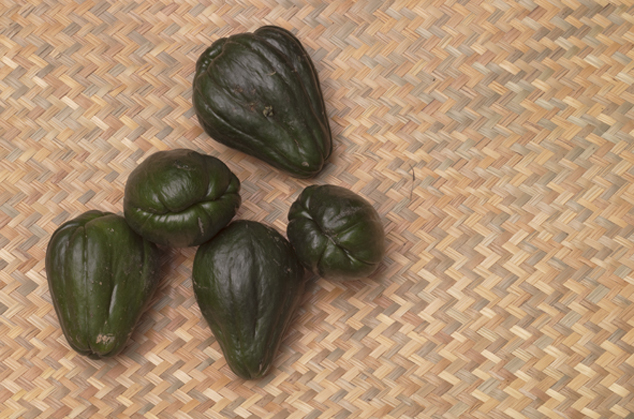
Chayote dark version known comonlly as "guisquil", photo by Nicholas Hellmuth
How many books on Mayan agriculture recognize the güisquil
I would be curious to see what results you would have if you tabulated the major books on Mayan agriculture to see how often chayote (Sechium edule, güisquil) is featured as a major crop.
I would not be surprised if there were many tabulations where wiskil is in the list but not discussed. Fortunately some lists do include güisquil. The Purdue university horticultural site (one of my favorites) correctly includes chayote. But I doubt most authors on Mayan agriculture or local ethnobotany have seen the sometimes endless fields of perulero or güisquil.
Güisquil (dark green variety)
Roots (tubers), stems, fruit (vegetable), leaves and flowers are all edible. Even the seed can be eaten if you serve it before it gets too mature.
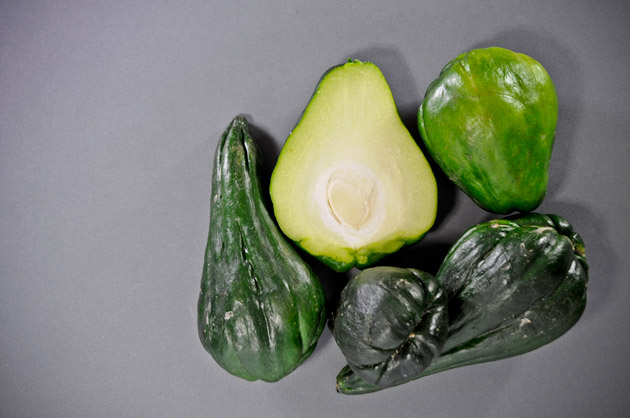
Güisquil, the dark green variety of the Chayote. All the fruit is edible if consumed before it gets too mature.
Cho-cho in Belize, chayote, wiskil (güisquil, huisquil) or perulero in Guatemala. The root of chayote is often called ichintal (spelled various ways).
Perulero is more white. There is also a light colored variety with spines, short and relatively soft, but still spiny. All are called Sechium edule. There are also several wild species, but since the favored edible plant is Sechium edule there is no need to list all the wild species here. You can see the list in Lira (1996: 20-24).
Flowers of Sechium edule are edible
Normally we have separate list for edible flowers. But the flowers of chayote are so small that they are simply part of the stems and buds. So you eat all the young shoots, whether the vine or the bud or the open flower all together.
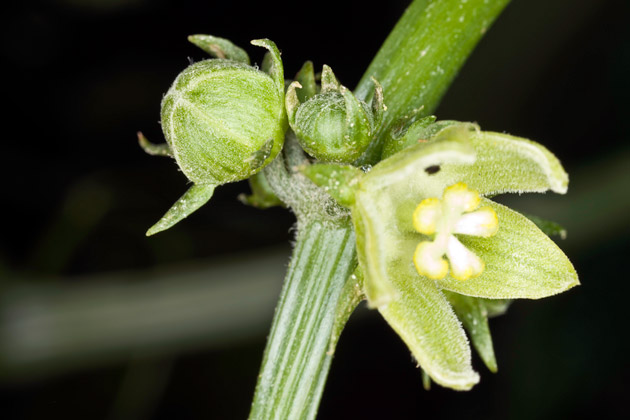
Close up of Güisquil flowers, taken at Pinula plantation using a Canon EOS-1Ds Mark III
Other uses
It has been used as a medicinal plant in the treatment of atherosclerosis, bronchitis, dermatitis, hypertension, leukoderma, pertussis and as diuretic and scar. It is recommended an infusion of its leaves in case of cystitis. The liquefied chayote is used in industry and filler juices. The dried leaf used to make medicinal cigarettes. Also used as fodder for domestic animals.
Is pollinated by insects, especially bees of the genus Trigona.
The crop is grown from seed and vegetatively through tender parts. Two fruits should be planted with seedlings germinated preferably in vertical position, covering the base with soil.
The stems, for its flexibility and resistance, have been aimed at crafting baskets and hats. In India, the fruits and roots, in addition to being used as human food, also used as fodder.
The roots of chayote are harvested and eaten separately.
The fruit (the vegetable) are harvested more than anything else, since if you chop off all the shoots (to sell the geenery) then you have less vegetables.
Same with the roots: ichintal. If you dig up the root and eat this, you don't have any wiskil plant remaining
I don't think Sechium edule is featured in Mayan art or hieroglyphic writing
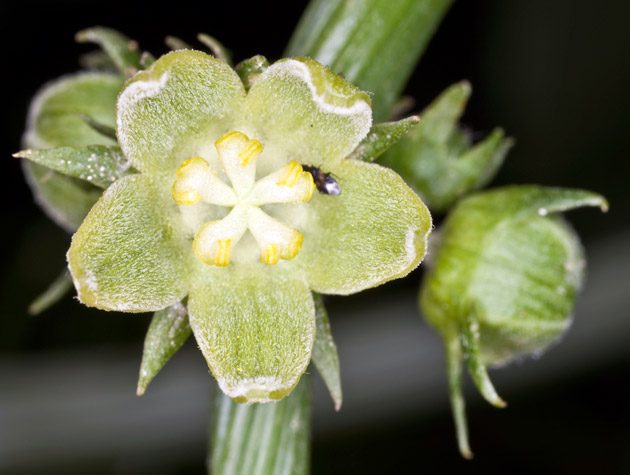
Open wiskil flowers, taken at Pinula plantation using a Canon EOS-1Ds Mark III
With all the plants and birds and species being found in the murals of San Bartolo, nothing would surprise me, but I have not yet noticed wiskil in Preclassic or Classic Maya murals. I have not yet found any ceramic effigies of the vegetable pears either.
Thesis potential for studies of Sechium edule
Sechium edule tends to be raised on steep slopes. Maize is also grown on steep slopes, but studies should be undertaken to see which kind of farming results in more, or less, erosion of soil from such steep slopes.
A significant aspect of Sechium edule for a thesis is the fact that almost no studies of root crops have mentioned these roots as a potential food resource.
Gallery
{vsig}Guisquil-Gallery{/vsig}
BIBLIOGRAPHY on Sechium edule
We have over three hundred plants to study, so it will take a while to finish the bibliography, but here are a few places for you to start. We have a relatively extensive bibliography on useful Mayan plants in our annual report 2010-2011.
BIANCHINI, Franca
2003 Fruit and Vegetables. IARC Handbooks of Cancer Prevention. World Health Organization.
LIRA Saade, Rafael
1996 Chayote Sechium edule (Jacq.) Sw. IPK, IPGRI. 58 pages.
n. d. La Agricultura en Mesoamerica: Chayote (Sechium edule). Herbario Nacional de Mexico.
Available on-line. This is the best general introduction to chayote that I have found so far.
First posted 2 August 2011