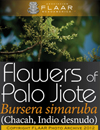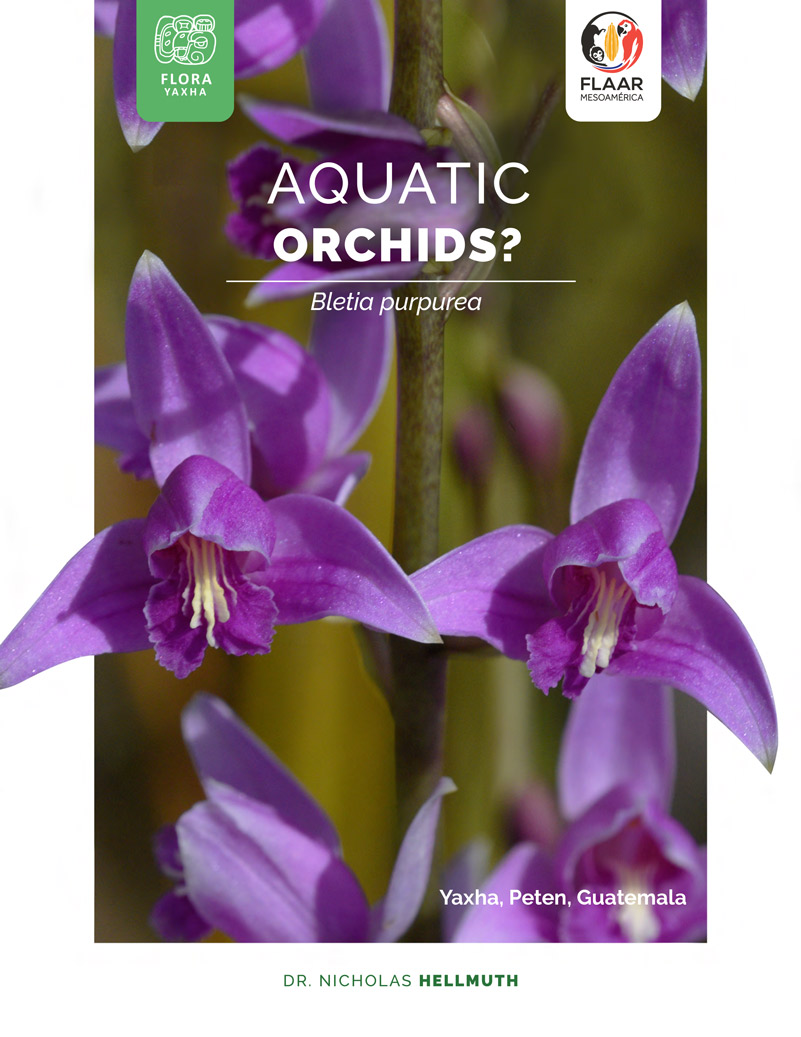

Bursera simaruba, palo de jiote, chaca, gumbo limbo is waiting for you at Yaxha
We estimate there are between 180 and 220 tree species in Parque Nacional Yaxha, Nakum and Naranjo. Most of these trees are also throughout central Peten, so also in Cerro Cahui, Bio Itza, and El Zotz and of course in the extensive Parque Nacional Tikal.
We (at FLAAR (USA) and FLAAR Mesoamerica (Guatemala) are interested in
- All trees that have edible parts
- All trees that have usable parts (since trees are biodegradable and renewable resources)
- All trees that are crucial for local birds and mammals
- All trees that are important parts of local ecosystems
- All trees that have curious or interesting aspects
We are also working on herbs, shrubs, vines, mushrooms, lichens, water plants, and fauna, but this present page is on tree aspects.
Bursera simaruba, palo de jiote can produce incense for the Classic Maya but our interest at the moment is studying trees that shed their bark in order to get rid of lichen and vines (that these trees don’t want climbing up to rob sunlight when the vines spread out across the treetops). The vines are not parasitic (at least not most of them). But some tree trunks have so many vines around them you can’t really see the tree itself.
In the moist areas of Municipio de Livingston (southeast of Peten), where we have a 15 month project, we have found remarkable number and diversity of trees whose bark sheds off to get rid of vines. Now that we have a 5-year project of coordination and cooperation with CONAP, we will be curious to learn how many genera and species of trees in the Peten have evolved over millennia to have their bark thin and peel-able (besides the obvious Bursera simaruba and the common allspice tree, Pimienta dioica, pimienta gorda). Both these trees are common at Yaxha; at Tikal pimiento gorda is common between the parking lot (on the former airfield of the 1960’s) and the park administration offices.
The present webpage is on Bursera simaruba. We will then do tree-by-tree and once we have all the species we will do a FLAAR report on “Trees with peeling bark of the Reserva de la Biosfera Maya of Peten, Guatemala.”
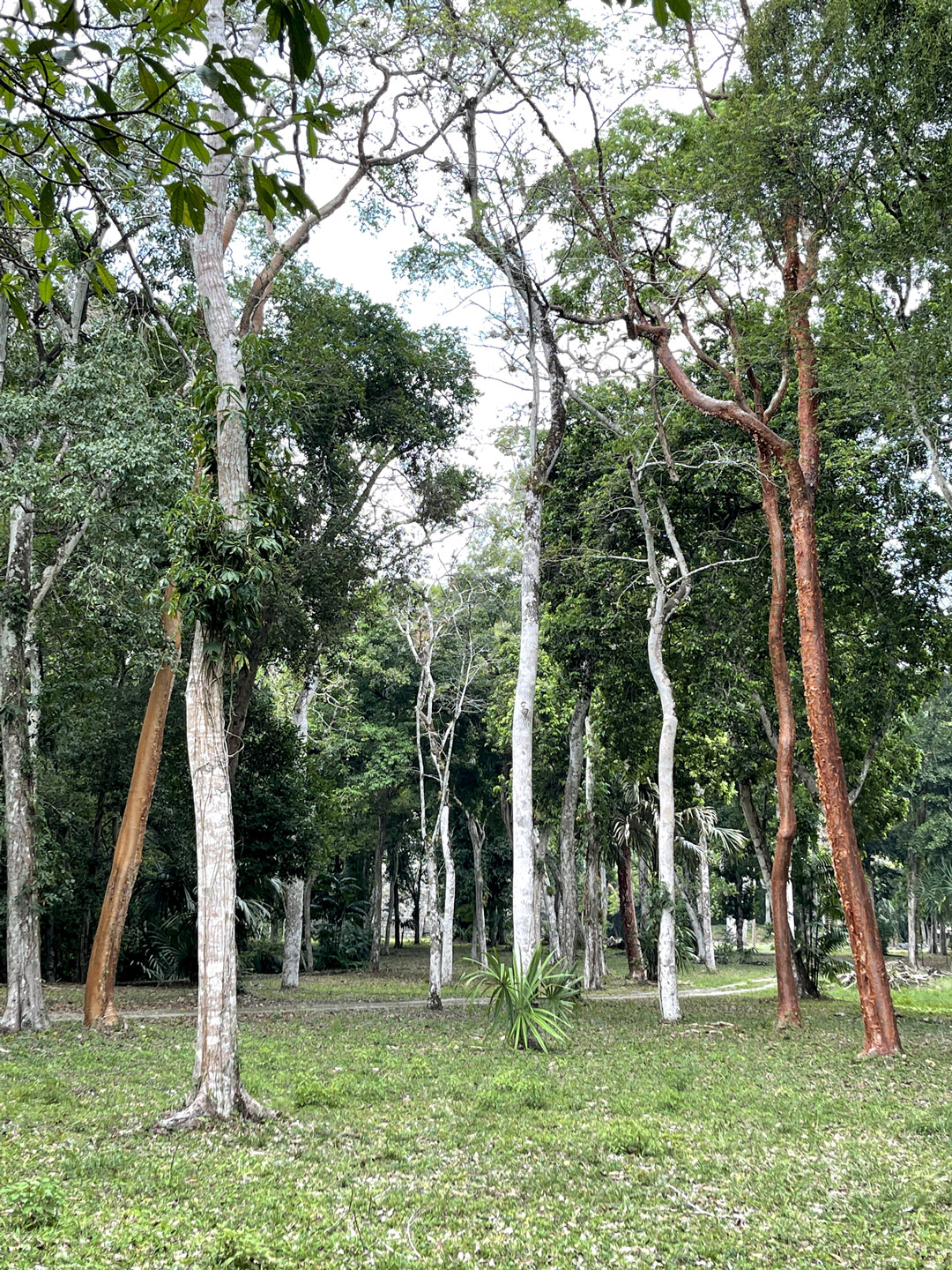
Bursera Simaruba, photo taken by dr Nicholas Hellmuth at Jiote Yaxha with an iPhone 12 Pro.
Correct Botanical name for this tree of the Mayan world
The accepted scientific name is Bursera simaruba (L.) Sarg. Local names in Guatemala are palo de jiote and chaca. In Belize Bursera simaruba is called gumbo limbo and other names that joke about its peeling "sunburned" bark.
There are about 16 synonyms (names used in past centuries; you can find all these on http://www.theplantlist.org/tpl/record/kew-2687649).

Bursera Simaruba, photo taken by dr Nicholas Hellmuth at Jiote Yaxha with an iPhone 12 Pro.
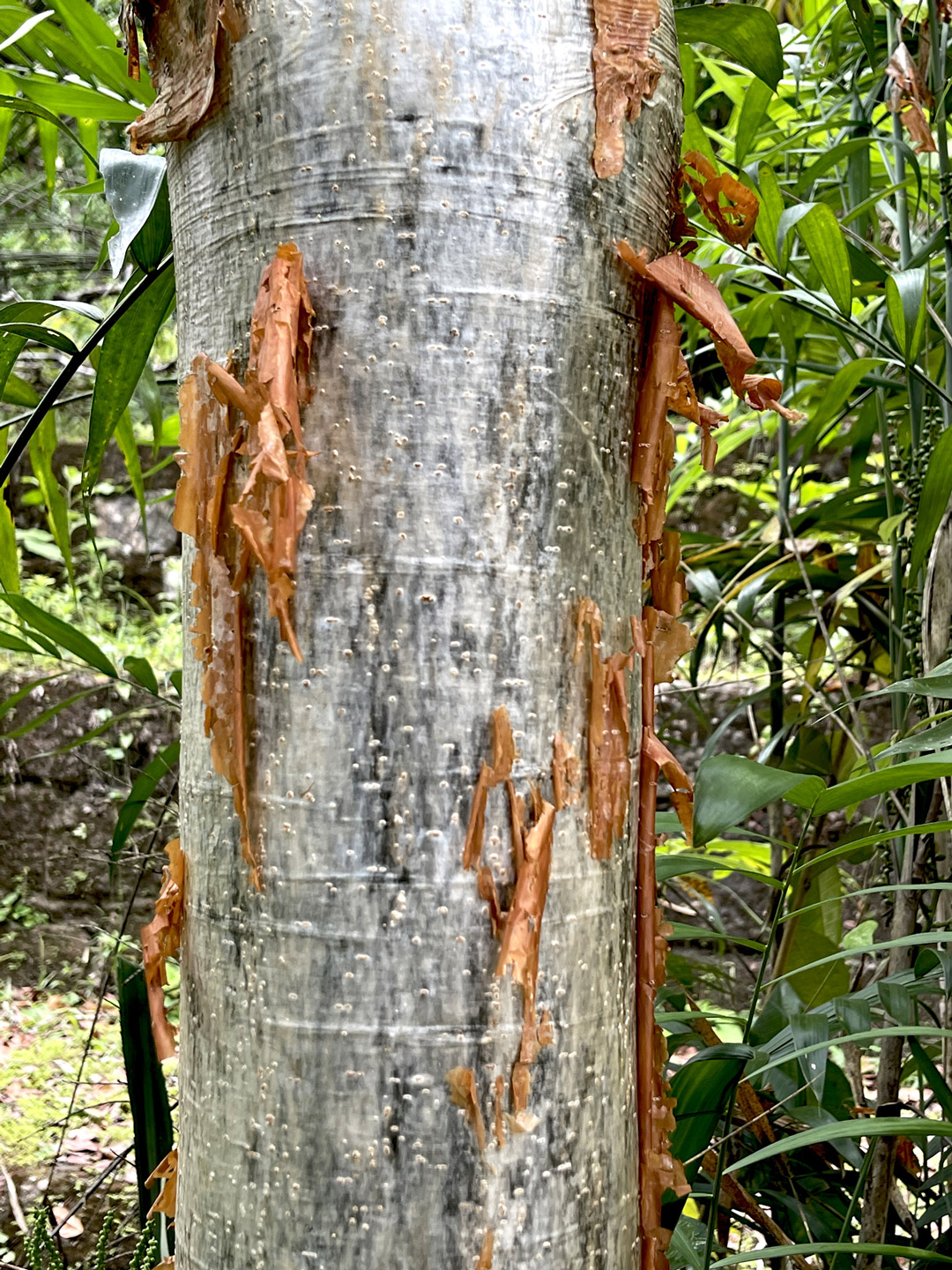
Bursera Simaruba, photo taken by dr Nicholas Hellmuth at Jiote Yaxha with an iPhone 12 Pro.
You can find “zillions” of this Bursera simaruba, palo de jiote tree in Yaxha
There are palo de jiote trees by the millions throughout Peten and lots of the related species in the bosque seco corridor as you drive east along CA9 towards the turnoff to Peten (at La Ruidosa, you turn north on highway CA13). But a great place to see the photogenic peeling bark is in the campground area near the lake Yaxha (north shore of the lake).
At present we show the trees and their bark. Later (when we do a report) we will show the lichen and vines being shed. And, we will document instances where the lichen and vines have survived the peeling attempts of the tree: a good example of “survival of the fittest.”
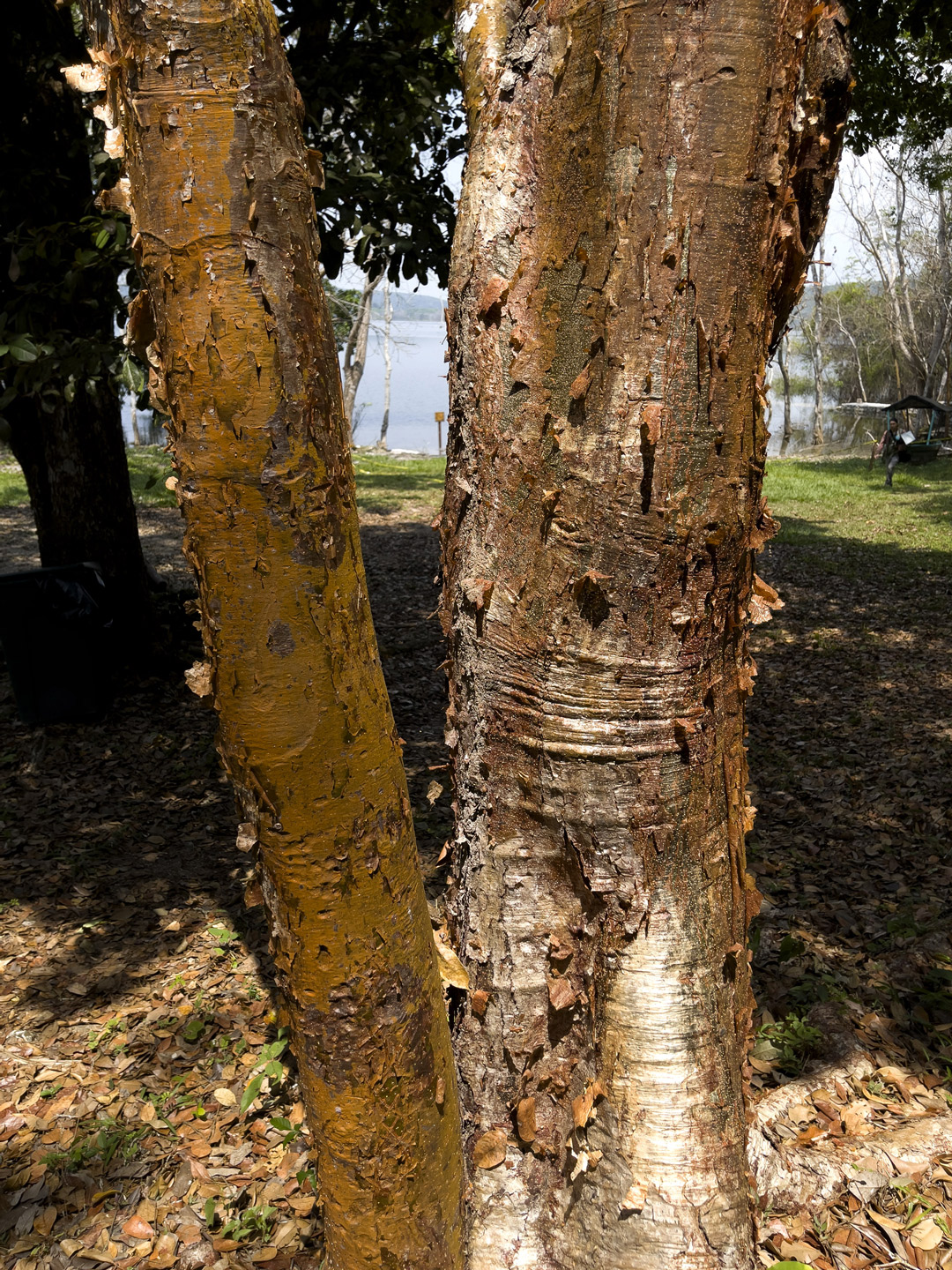
Bursera Simaruba, photo taken by dr Nicholas Hellmuth at Jiote Yaxha with an iPhone 12 Pro.
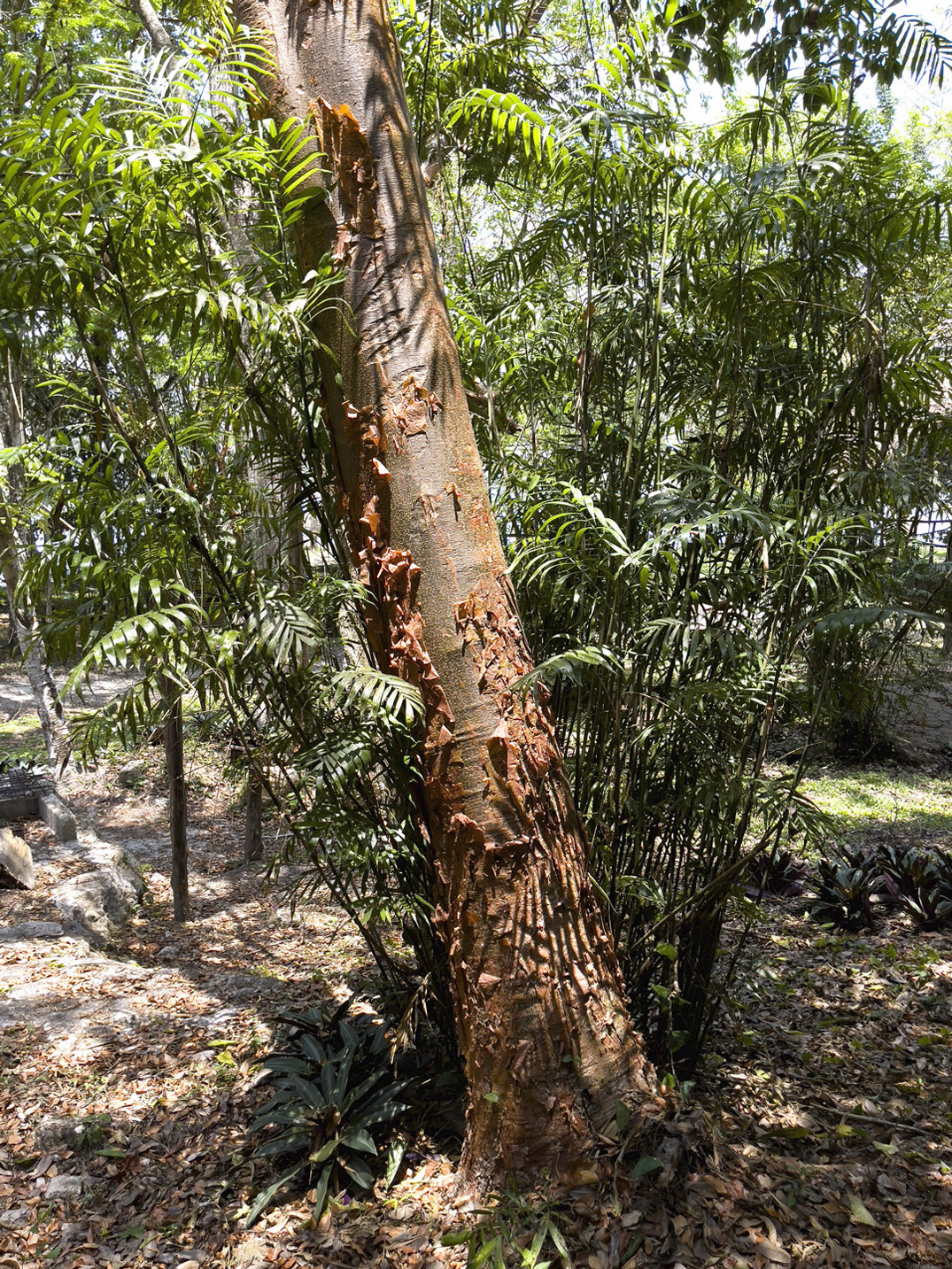
Bursera Simaruba, photo taken by dr Nicholas Hellmuth at Jiote Yaxha with an iPhone 12 Pro.
Lots more Bursera simaruba, chaca trees, along Blom Causeway and also Lincoln Causeway
When I mapped Yaxha in the 1970’s I followed the Tikal project mapping tradition of naming local causeways for early archaeologists who had dedicated their time and effort to mapping the site previously. William Lincoln had mapped Yaxha for the Carnegie Institution of Washington. So we named a causeway after him. By coincidence he was a classmate of my architect-father George Hellmuth; Lincoln kindly came to visit us while we were working at Yaxha in the 1970’s.
Frans Blom worked throughout the Mayan areas for many decades so we named a causeway after him. I have stayed at his former house in San Cristobal de las Casas in the 1970’s.
The reason FLAAR was formed to handle mapping Yaxha was because earlier maps of dozens of Maya cities by Teobert Maler, Sylvanus Morley and everyone else were primarily maps to show where the carved stone stelae were and where the large pyramid temples and palace acropolises were. I wanted to document every single mound, whether or not there was a stone temple on top of it. So we (Miguel Orrego and the team of helpful students from Guatemala and USA) found several hundred percent more structures at Yaxha than every earlier mapper put together.
We (with architect Frank Ducote and helpful student assistants) then improved the map of Nakum significantly (even with only a few days there due to it being rather remote in those days). All three islands in Lake Yaxha (Topoxte, Cante, and Paxte) also got improved maps by students (Jay Johnson for Cante and Paxte). Don and Prudence Rice helped for many seasons and Carlos Rudy Larios was with us the first week and, if my mind can remember from half a century ago, he found the Twin Pyramid Complex at Yaxha. Epigrapher John Justeson helped as did illustrators that we will be mentioning in upcoming publications of their helpful line drawings of fauna of Yaxha.
There are palo de jiote trees throughout the Yaxha area of Parque Nacional Yaxha, Nakum and Naranjo but especially easy to find and photograph near the north shore of Lake Yaxha and along the Blom Sacbe because these areas have the brush neatly cleaned away.
If you are in Guatemala City, you can see and photograph peeling bark of the Bursera simaruba, chaca trees in the nice Jardin Botanico (Calle Mariscal Cruz crossing near beginning of Avenida Reforma), Zona 10. This botanical garden is managed by CECON-USAC.
Posted June 8, 2021